
FOAMEd, innovation and open source – a cautionary tale
by Dr. John George Karippacheril on November 14, 2015
Author: Dr. John George Karippacheril,
Specialist Anaesthesiologist, Abu Dhabi,
Former Associate Professor of Anaesthesiology,
Manipal University, India.
Email: johngeorgedon@gmail.com
Twitter: @johngeorgedon
Peer reviewed by Dr Seth Trueger and Dr Minh Le Cong
“The value of an idea lies in the using of it” — Thomas Edison
An idea’s worth should be measured by the extent to which it is used. An idea represents a crystallised thought process, a novel perspective on a pressing problem, a solution that benefits not just its creators but also the society at large. The spirit of open-source research aspires to these ideals of spreading the benefits of innovation to all.
The success of the open-source software development paradigm has been emulated in the rise of a new force – free open access medical education (#FOAMed), fuelled by the advent of online social media. Ideas spread organically and rapidly from one to any part of the globe, an integral requirement for its success. However, this rapid dissemination can also be a bane for the authors of open-source education. Intellectual property rights are often poorly understood or infringed on.
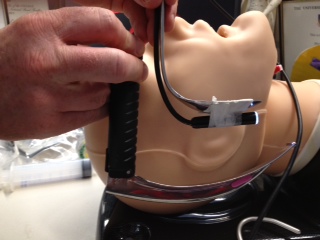
A recent incident is a case in point. The World Federation Society of Anaesthesiologists (WFSA) in association with Baxter International Inc., announced the winners of its ‘Innovation Awards 2015’ – honoring promising new ideas especially from developing nations. One of the ‘innovations’ described was particularly noteworthy – a new, low cost videolaryngoscope that could save lives, especially in these developing countries. Closer examination of the representative image and video shared in social media by its author looked quite familiar – a virtual recreation of the technique of videolaryngoscopy using a USB camera, Macintosh laryngoscope and a personal computer, published by this article’s author in an international, indexed journal, two years earlier! Here and here.
@springerpub work published by us in https://t.co/4dMXDx6S13 has been plagiarised in WFSA award https://t.co/23KpvILuBX & refusal to retract
— John George K (@johngeorgedon) November 9, 2015
//platform.twitter.com/widgets.js
An attempt to contact the WFSA body was initially encouraging, with promise of an investigation into the awardee’s claim of it being novel. Online search did not reveal any previous description or publication of the technique by the claimant. However, after deliberation, the body concluded that the suspiciously similar technique was and is an innovation! The reason given incredulously was ‘a minor modification’ in its technique – use of zip tie to secure the USB camera to the laryngoscope instead of adhesive tape! More disturbingly, a reason for accepting the awardee’s claim was his unawareness of the prior publication and his application for a patent for the technique, given the lack of any patent for the previously published technique.
@thomas1973 @ketaminh https://t.co/f8F3vH3dIl WFSA award & patent for VL innovation claim, work published 2 yrs ago! https://t.co/4dMXDxotpD
— John George K (@johngeorgedon) November 11, 2015
//platform.twitter.com/widgets.js
The strength of an idea published in the public domain, is in fact its protection from patents! Open-source software projects have used this very fact. ‘Prior art’ or ideas revealed through public disclosure can not be patented. Annoucements in news media, publication in journals, presentation in conferences constitute public disclosure. Not accessing the prior publication or even ignorance of prior art can not be used as a defense for patent rights. Patent offices are usually expected to scrutinize applications for prior art or ‘state-of-art’ before granting a patent.
The vibrant online #FOAMed community has lessons to be learned from this cautionary tale. Ideas may be susceptible to poaching, reproduction or modification without due acknowledgement or respect for intellectual property rights. This however, should not deter authors from publishing their work as open source or in the public domain. The strength of open source publication is in its public disclosure. Authors must prominently display their copyright or licensing terms in their publication. Their statisfaction or reward is often based on the widespread utility of the idea itself.
@ketaminh @EMcardiac @baxter_intl #WFSA refused to retract its award for VL that is rehash of our novel VL concept https://t.co/4dMXDx6S13
— John George K (@johngeorgedon) November 9, 2015
//platform.twitter.com/widgets.js
@johngeorgedon @springerpub @ketaminh Very frustrating. However does significantly help dissemination of your idea: low cost VL for all!
— Faizan H. Arshad (@emscritcare) November 11, 2015
//platform.twitter.com/widgets.js
The dangers of open source creativity ! @johngeorgedon publishes on improvised VL concept a few yrs ago. Now @wfsaorg award prize 4 copied !
— Minh Le Cong (@ketaminh) November 11, 2015
//platform.twitter.com/widgets.js
You create and share #FOAMED . It is open to piracy and copying for profit / academic gain. Plagiarism occurs! Just ask @johngeorgedon !
— Minh Le Cong (@ketaminh) November 11, 2015
//platform.twitter.com/widgets.js
@thomas1973 @ketaminh yes true! #FOAMed can be plagiarised lesson to be learned. Article on VL concept here https://t.co/CH7t1a98Dd
— John George K (@johngeorgedon) November 11, 2015
//platform.twitter.com/widgets.js
@AndyDW_ @wfsaorg @springerpub no patent applied for the VL concept. Published it to spread the idea in public domain like my other projects
— John George K (@johngeorgedon) November 11, 2015
//platform.twitter.com/widgets.js
@ketaminh @EMDocBrett @baxter_intl here you go: 1st image is the patent claim, 2nd from article published 2 yrs ago pic.twitter.com/hUg9byY5dl
— John George K (@johngeorgedon) November 11, 2015
//platform.twitter.com/widgets.js
@springerpub @AndyDW_ thanks! Request @SpringerNature to urge @wfsaorg retract VL #InnovationAward idea copied from https://t.co/4dMXDxotpD
— John George K (@johngeorgedon) November 12, 2015
//platform.twitter.com/widgets.js
@edexam @ketaminh @wfsaorg @SpringerNature ideas published in public domain or prior art can’t be patented legally. https://t.co/DB4goKBJGg
— John George K (@johngeorgedon) November 12, 2015
//platform.twitter.com/widgets.js
@ketaminh @johngeorgedon They patented zip-tying a $15 usb camera that you can get on ebay to a laryngoscope? https://t.co/C5cIFX8pag
— Andy Buck (@edexam) November 12, 2015
//platform.twitter.com/widgets.js
@edexam @ketaminh @SpringerNature @wfsaorg @baxter_intl #WFSA CEO & awards body thinks using a smaller usb camera and zip tie = innovation!
— John George K (@johngeorgedon) November 12, 2015
//platform.twitter.com/widgets.js
@johngeorgedon @ketaminh @SpringerNature @wfsaorg @baxter_intl But the “innovation” award is pure BS unless they can prove prior invention
— Andy Buck (@edexam) November 12, 2015
//platform.twitter.com/widgets.js
 Prehospital and Retrieval Medicine - THE PHARM dedicated to the memory of Dr John Hinds
Reblogged this on Dr Aniz Khalfan and commented:
Concerns with Intellectual Property rights and #FOAMEd Free Open Access Medical Education