
Dr Noemi Welsch talks about her experience of volunteering with the Floating Doctors in Panama. The post Volunteering with Floating Doctors in Bocas …
Volunteering with Floating Doctors in Bocas del Toro
In memory of Dr John Hinds
Dr Noemi Welsch talks about her experience of volunteering with the Floating Doctors in Panama. The post Volunteering with Floating Doctors in Bocas …
Volunteering with Floating Doctors in Bocas del Toro
Ventilator-assisted preoxygenation (VAPOX) is a method of preoxygenation and apnoeic ventilation, prior to intubation. This article describes the use of VAPOX during intubation of critically unwell p…
— Read on onlinelibrary.wiley.com/doi/10.1111/1742-6723.14404
Risk of complications using a sedation protocol for aeromedical retrieval of acutely unwell mental health patients: a retrospective cohort study in Outback Australia | Emergency Medicine Journal
— Read on emj.bmj.com/content/early/2025/07/15/emermed-2024-214719.long
Editor’s comments : This is a good article comparing standardised protocol approach vs non protocolised approach to aeromedical retrieval of acute mental health patients . The standardised protocol described is very similar to the RFDS Queensland one developed during my aeromedical career in that state. It uses a standardised risk assessment tool and a standardised tiered chemical sedation protocol focussing on oral olanzapine & diazepam initially then escalating to IM/IV droperidol then ketamine . This overall standardised approach is also very similar to the Surviving Sedation guidelines published on this website .
The notable findings of this study are :
1. Midazolam is associated with highest complication rates and cannot be recommended as monotherapy for sedation during aeromedical transfer of this patient group
2. A standardised protocol approach has fewer complications and reduces length of retrieval compared with non protocol management
3. Ketamine sedation appears safer than midazolam in this setting in unintubated patients
4. Intubation carries high rate of severe complications in this patient group and should be considered a high risk intervention
Arteriovenous malformations (AVMs) in the head and neck present significant challenges due to airway management complexities and hemorrhage risks. This case report describes a 15-year-old female with a congenital facial AVM causing dyspnea and …
— Read on pmc.ncbi.nlm.nih.gov/articles/PMC11681977/
PREHOSPITAL AMPUTATION PERFORMED UNDERWATER DESPITE GIGLI SAW FAILURE!
Australian prehospital critical care and ketamine at its best www.abc.net.au/news/2025-07-07/the-river,-part-2-franklin-river-rescue/105504920
Ketamine versus propofol for sedation in acute psychiatric emergencies during aeromedical retrieval: a randomized controlled trial
— Read on www.aeromedconference.com/10079
When a white-water rafter fell into the Franklin River, it triggered an extraordinary rescue mission that pushed everyone to the brink.
— Read on www.abc.net.au/news/2025-06-29/franklin-river-rescue-man-stuck-lithuanian-valdas-leg-amputated/105420916
Prehospital Cricothyrotomy: A Narrative Review of Technical, Educational, and Operational Considerations for Procedure Optimization – Journal of Emergency Medicine
— Read on www.jem-journal.com/article/S0736-4679(24)00284-1/fulltext
A secondary analysis was performed using harmonized data from two large, double-blinded, randomized prehospital TXA trials. Prehospital TXA is safe and independently associated with a dose-dependent lower 28-day mortality risk and lower 24-hour red …
— Read on pmc.ncbi.nlm.nih.gov/articles/PMC11422517/
Electroconvulsive therapy (ECT) can be effective for a variety of psychiatric conditions, including for some patients who are very psychotic or agitated. Transferring such patients from the psychiatric ward to the ECT clinic can pose significant …
— Read on pmc.ncbi.nlm.nih.gov/articles/PMC12105946/
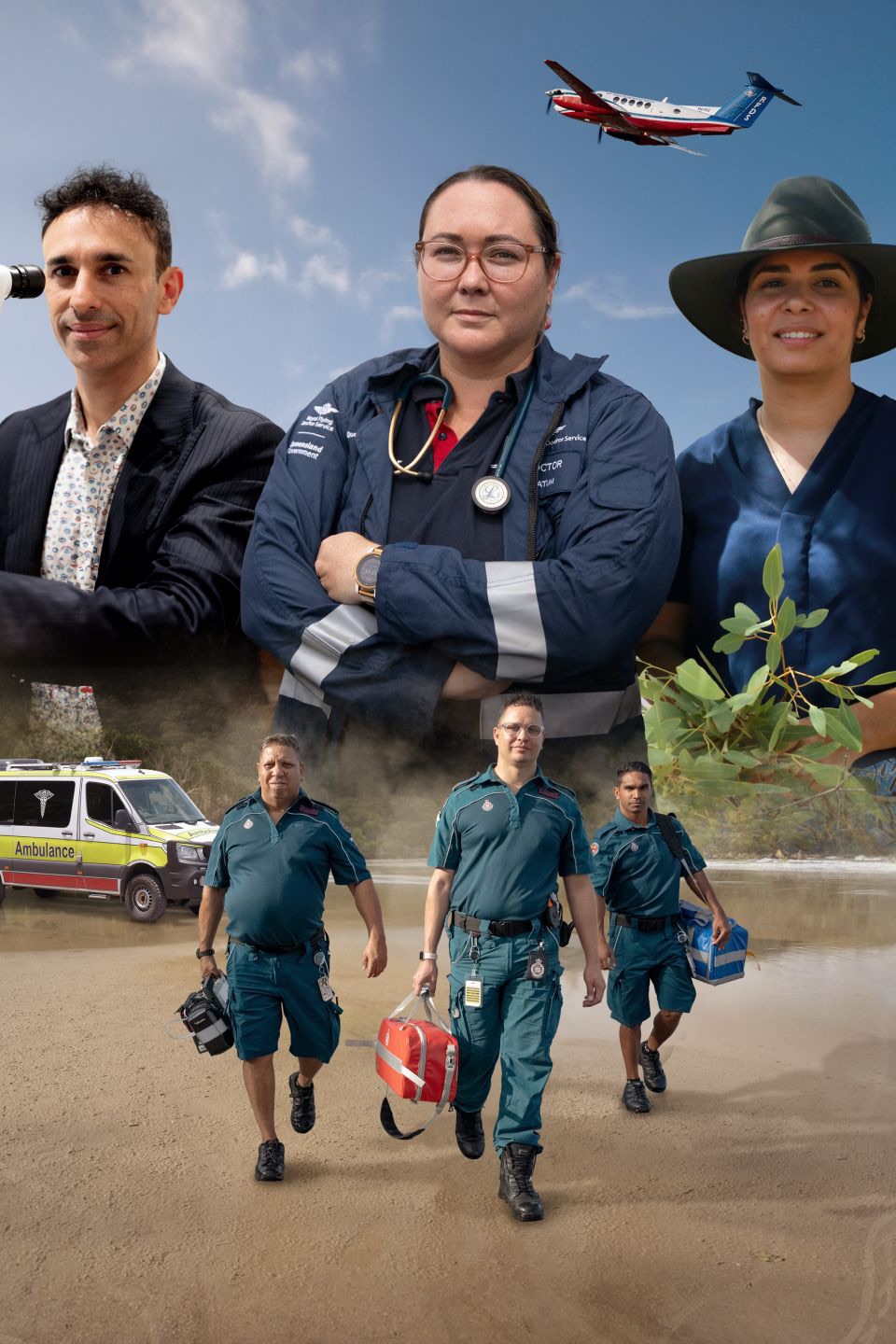 www.sbs.com.au/ondemand/tv-series/our-medicine
Episode 2 at 20min mark shows a psychiatric aeromedical retrieval from RFDS Cairns team with use of ketamine infusion for sedation . The patient is unintubated and responsive to voice but clearly calm and not agitated . As far as I know this is the first ever recorded televised footage of such a procedure in aeromedical setting anywhere at anytime in the world . My research and publications on the use of ketamine sedation in psychiatric aeromedical retrieval were all based on my 18yrs aeromedical work with RFDS and Cairns base and the first time I ever administered ketamine sedation for acute agitation during aeromedical retrieval was on a mission from Horn Island to Cairns . 18yrs later this documentary series records footage of a very similar retrieval mission and shows that ketamine sedation is effective and safe in the aeromedical setting for acute mental health related agitation.
LUCAS Mechanical CPR – Published Paper on Training from our Team – CLICK HERE
LUCAS Mechanical CPR Machine – application essentials in 1 minute
 Prehospital and Retrieval Medicine - THE PHARM dedicated to the memory of Dr John Hinds