Continue reading “SMACCFORCE NEEDS YOU! PLANES, HELOS & AMBULANCES!”
JOHN HINDS ON AIRWAY AT #RCEMBELFAST
Great wisdom on supporting airway skills and experience in ED from @DocJohnHinds – wide relevance to European depts http://t.co/T9ycGd97gd
— Cliff Reid (@cliffreid) March 28, 2015
SMACC 2015 SGA Workshop Module Introduction
Laryngoscopy – A Definition of Terms
Suction Assisted Laryngoscopy Airway Decontamination
Suction Assisted Laryngoscopy Airway Decontamination UW Madison Mar 2015 from AirwayNautics on Vimeo.
Movie captures the important lessons of a simulation session based upon using a rigid suction catheter (Yankauer and other variant) to decontaminate the airway of a modified Laerdal Difficult Airway Simulator mannequin. The technique described in this simulation is known as the “SALAD” technique–Suction Assisted Laryngoscopy Airway Decontamination.
The central tenant of the SALAD technique is to make the rigid suction catheter the “tent-pole” of airway management–the suction catheter is utilized in all phases of laryngoscopy to facilitate the quick and proper placement of the laryngoscope blade on the first pass attempt, in lieu of older methods such as opening the patient’s mouth with a scissor-type gesture of the right forefinger and thumb. The result is speed and efficiency coupled with the ability to decontaminate the airway during routine and emergency airway management. In this same manner, the SALAD method can facilitate the insertion of Supraglottic Airways as well, including the Laryngeal Tube. Modern suction catheters beyond standard hospital-issued Yankauer suctions are discussed and demonstrated as well as portable suction systems are demonstrated.
Examining the Hairs on the Yak – A Good Chance for More Chat


One of the good things about research that has its own issues, is that there is lots of scope to learn from the things about it that are good, as well as those that aren’t so great. The nice thing about ongoing comment is it gives even more chances to explain why a researcher might make certain choices along the way. Every question in research has more than one way of approaching some answers. Dr Alan Garner returns to provide even more background on this particular study, which has already generated some interesting conversation and a follow-up post.
It’s an excellent thing to be able to keep having discussion around the challenges related to both conducting and interpreting a trial. These things always bring up so many valuable questions, which deserve a response. So this is not going to be quick, but I hope you’ll have a read.
Lots…
View original post 1,932 more words
A response to the HIRT trial
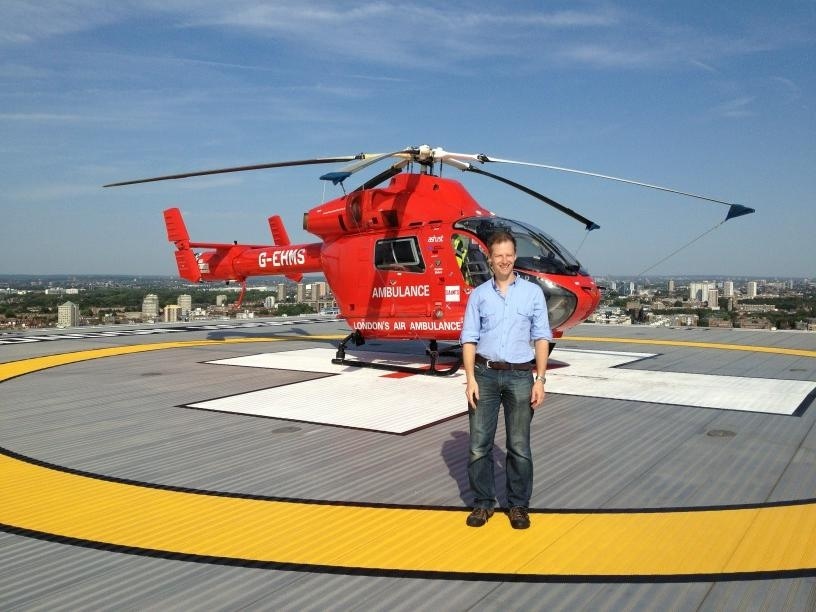
Same, same? Actually different

More of the operational data from the Head Injury Retrieval Trial has just been published. By luck more than anything else this has occurred within 24 hours of the publication of the main trial results which you can find here.
Some operational data about systems used in the trial has already been published. A key part of HIRT was a dispatch system where the operational crew were able to view screens with case information as they were logged to spot patients who may have severe enough injuries to warrant advanced care. They could then use the available information or call the initiating number for further details. If the available information matched the criteria for consideration of an advanced care team, the randomisation process then swung into action. The whole idea was to streamline the process of activation of an advanced care team to severely injured patients.
A study looking…
View original post 1,211 more words
HIRT – Studying a Non-Standard System that Ended up as Standard

There’s always a bit of extra reflection you can’t include in the discussion of a research paper. Dr Alan Garner reflects more on some of the challenges of doing research in prehospital medicine.
The main results of the Head Injury Retrieval Trial have now been published on-line in Emergency Medicine Journal. We have paid the open access fees so that the results are freely available to everyone in the spirit of FOAM. This was an important study that was eagerly awaited by many clinicians around the world.
The summary from my point of view as the chief investigator: an enormous opportunity wasted.
It is now nearly ten years since we commenced recruiting for the trial in May 2005. Significant achievements include obtaining funding for a trial that was ultimately to cost 20 million Australian Dollars to run. I am not aware of another prehospital trial that has come anywhere close to this…
View original post 928 more words
Head Injury Retrieval Trial published!

SPEEDBOMB: A simple and rapid checklist for Prehospital Rapid Sequence Induction
Lessons for management of acute agitation in rural EDs
The Top Ten Anaesthetic iPhone Apps by the Vent
The Top Ten Anaesthetic iPhone Apps http://t.co/Nd0PYtbixp
— The Vent (@TheVentOrg) March 17, 2015
RSI Basics Podcast with Minh Le Cong (@ketaminh on twitter)

A Podcast with Minh Le Cong on beginner RSI. Recorded for my own personal reference but its such a great resource for Paramedics, Paramedic Students and a good all round touch up on the subject with a person much more knowledgeable than I.
If your not listening to Minh I highly suggest you start! His podcast was my first step into #FOAMed, so its an absolute honor to have him on my own.
You can find the Podcast over on I-Tunes: https://itunes.apple.com/au/podcast/downstairs-care-outthere-podcast/id876296199c (please take time to leave a review or rating!!)
Below you will find some of the papers, trial and websites that we mention throughout, all are a good read. There’s also a number of different checklist ideas.
PHARM Podcast 61:
https://prehospitalmed.com/2013/02/19/pharm-podcast-61-rapid-sequence-intubation/
The Original RSII Article;
The study protocol for the Head Injury Retrieval Trial (HIRT): a single centre randomised controlled trial of physician prehospital management of severe…
View original post 49 more words

 Prehospital and Retrieval Medicine - THE PHARM dedicated to the memory of Dr John Hinds
You must be logged in to post a comment.