Fluid resuscitation in bleeding trauma patient: are you aware of wich is the right fluid and the right strategy?

medest118's avatarMEDEST

DCR copy

The fluids of choice in prehospital field are, in most cases, cristalloids (Norma Saline or Lactate Ringer).

But what is the physiological impact of saline solutions when administered in large amounts (as the latest ATLS guidelines indicates) to hypotensive trauma patients?

Is aggressive Fluid resuscitation the right strategy to be pursued?

The triad of post-trauma lethal evolution is:

  • Hypotermia
  • Acidosis
  • Coagulopathy

Aggressive fluid resuscitation with cristalloids, and saline solutions in particular, can be detrimental in many ways:

  1. Cristalloids tend to displace the already formed clots and improves bleeding
  2. Normal Saline produce hypercloremic acidosis worsening coagulation and precipitating renal and immune dysfunction
  3. Cristalloids diluts the coagulation factors and precipitate the coagulation system (dilution coagulopathy)
  4. Cristalloids rapidilly shift in intercellular space worsening SIRS process and interstitial edema (brain edema, bowel wall edema) with consequent compartment hypertension

So wich is the perfect fluid to infuse in trauma?

The perfect fluid doesn’t exists.

Balanced saline…

View original post 241 more words

Scary Little Creatures

careflightcollective's avatarThe Collective

Dr Andrew Weatherall does prehospital doctor stuff but spends lots of time serving the somnolent god of anaesthesia  in a tertiary paediatric hospital. He has particular interests in cardiac, thoracic, trauma and liver transplant anaesthesia and is trying to be a PhD student in his spare time.  You can also find him as @doc_andy_w 

Little creatures have the potential to cause significant stress. It’s true of spiders. It’s true of parasites. And for many medicos, it’s true of paediatric patients. All too often, the experienced clinician confronted with the alien life-form of a kid goes through a rapid medical devolution, retreating to the almost foetal uselessness of a medical student confronted for the first time by having to do a procedure they’ve only read about.

Dance all you like tiny peacock spider, still wary. [via Jurgen Otto on Flickr under "Some Rights Reserved CC licence 2.0] Dance all you like tiny peacock spider, still wary. [via Jurgen Otto on Flickr under “Some Rights Reserved CC licence 2.0] It’s entirely reasonable to feel…

View original post 1,190 more words

The Bind About Pelvic Binders (Part 2)

careflightcollective's avatarThe Collective

This is part 2 in Dr Alan Garner’s series on pelvic fractures and the approach to binders. You can find part 1 here

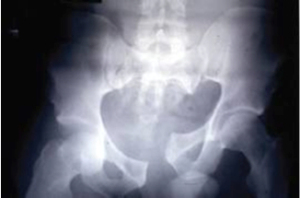
In part one we had a look at the evidence for benefit from pelvic binders. In short there is no study yet published showing a significant improvement in mortality. Not even a cohort study.

Of course, it still might be OK to use them if they possibly help as long as there is no evidence of harm either (and they don’t cost too much). The probability of good has to outweigh the probability of evil. It is the potential for evil that I want to examine now so we can see where the balance lies.

Before we can do that though we need to have a quick look at the types of pelvic ring fractures (no one is suggesting that non-pelvic ring fractures of the pelvis…

View original post 1,253 more words

The Bind When it Comes to Using a Binder

careflightcollective's avatarThe Collective

This post by Dr Alan Garner is the first of a trio on the topic of pelvic fractures and the evidence for what to do. Alan is an emergency physician at Nepean Hospital in Sydney and the Medical Director of CareFlight, having started in prehospital medicine in 1996. He has a bunch of other interests but there’s not enough space for that here.

Unfortunately I am old enough to remember when MAST suits were considered standard of care. In many states of the US it was law that ambulances had to carry them – that is how convinced everyone was that the things were doing good, not evil. We were all misled by measuring surrogates of outcome such as blood pressure rather than the outcomes that really matter, morbidity and mortality. Of course when good studies evaluating mortality were eventually done we discovered the evil side of the device and…

View original post 867 more words

Mechanical CPR: Three CHEERS or a big thumbs down?

Robbie (@AmboFOAM)'s avatarAmboFOAM

There has been a fair bit about mechanical CPR devices floating around the FOAMasphere lately, so I thought I should probably do a post.

These devices are not exactly new (check out the Thumper, in use in Victoria in the 70s) However, there seems to be a surge in interest in these devices, and I must say there seems to me to have been a largely positive buzz about them in spite of the evidence for their effectiveness being somewhat lacking to say the least.

View original post 1,359 more words