The Bind About Pelvic Binders (Part 2)

careflightcollective's avatarThe Collective

This is part 2 in Dr Alan Garner’s series on pelvic fractures and the approach to binders. You can find part 1 here

In part one we had a look at the evidence for benefit from pelvic binders. In short there is no study yet published showing a significant improvement in mortality. Not even a cohort study.

Of course, it still might be OK to use them if they possibly help as long as there is no evidence of harm either (and they don’t cost too much). The probability of good has to outweigh the probability of evil. It is the potential for evil that I want to examine now so we can see where the balance lies.

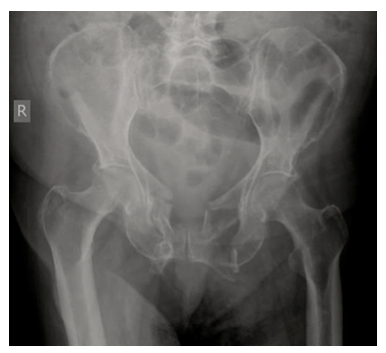
Before we can do that though we need to have a quick look at the types of pelvic ring fractures (no one is suggesting that non-pelvic ring fractures of the pelvis…

View original post 1,253 more words

The Bind When it Comes to Using a Binder

careflightcollective's avatarThe Collective

This post by Dr Alan Garner is the first of a trio on the topic of pelvic fractures and the evidence for what to do. Alan is an emergency physician at Nepean Hospital in Sydney and the Medical Director of CareFlight, having started in prehospital medicine in 1996. He has a bunch of other interests but there’s not enough space for that here.

Unfortunately I am old enough to remember when MAST suits were considered standard of care. In many states of the US it was law that ambulances had to carry them – that is how convinced everyone was that the things were doing good, not evil. We were all misled by measuring surrogates of outcome such as blood pressure rather than the outcomes that really matter, morbidity and mortality. Of course when good studies evaluating mortality were eventually done we discovered the evil side of the device and…

View original post 867 more words

Mechanical CPR: Three CHEERS or a big thumbs down?

Robbie (@AmboFOAM)'s avatarAmboFOAM

There has been a fair bit about mechanical CPR devices floating around the FOAMasphere lately, so I thought I should probably do a post.

These devices are not exactly new (check out the Thumper, in use in Victoria in the 70s) However, there seems to be a surge in interest in these devices, and I must say there seems to me to have been a largely positive buzz about them in spite of the evidence for their effectiveness being somewhat lacking to say the least.

View original post 1,359 more words

Auckland HEMS prehospital blood transfusion – coming soon to a helicopter near you

Scott Orman's avatarAuckland HEMS

Bloody hell.

Pretty much summarizes the severe traumas that define the essence of our trade.

And sometimes, the answer to critical bleeding is to give blood.

We are grateful to our colleagues at Sydney HEMS, who advise: “blood is provided to transfuse patients with life-threatening bleeding after meticulous attention to hemorrhage control.”

Auckland HEMS is poised to begin providing prehospital blood as part of our bundle of critical clinical interventions. We are fortunate to collaborate with the New Zealand Blood Service and with our local District Health Board to provide this service. http://www.nzblood.co.nz

Herein, please find our training video. We welcome your feedback.

Our draft Blood SOP is undergoing usability testing with our clinical teams. Once finalized, we will share this for FOAM.

This is an unsystematic review of the current literature. A few themes are emerging:

1. There is now evidence of survival benefit in the military and in…

View original post 251 more words

Episode 17 – The Spleen!

FOAMcast's avatarFOAMcast

(ITUNES OR LISTEN HERE)

The Free Open Access Medical Education (FOAM)

We review Dr. Scott Weingart’s episode 133 on pre-hospital REBOA (resuscitative endovascular balloon occlusion of the aorta). Weingart interviews Dr. Gareth Davies about the encounter, underscoring the increasing use of REBOA.

For a quick REBOA refresher, check out Episode 121.

REBOA (Review of REBOA) – First described in 1954 in the Korean War, this is a form of hemorrhage control below the level of the chest without having to do a thoracotomy with aortic cross clamping, which has sparse mortality benefit and can be dangerous to providers.  Most of the REBOA literature is from swine models and case-series, although there are currently larger trials underway.

  • Outline of procedure – Obtain arterial access through the common femoral artery, pass a vascular sheath, float a balloon catheter to the appropriate section of the aorta, and inflate the…

View original post 1,031 more words

d-loop Bougie and a King Vision enabled Mac 4 laryngoscope from Jim DuCanto

d loop Pocket Bougie and MacGyver King Vision enabled Mac 4

Our good friend Jim DuCanto continues to innovate and experiment with airways. Here is his newest idea to help manage tube delivery with shorter bougies in an efficient manner: the “d-loop”!

Continue reading “d-loop Bougie and a King Vision enabled Mac 4 laryngoscope from Jim DuCanto”