
A unique job opportunity for ICU fellow interested in Sim Education in Sydney 2017. The post Fellow in ICU and Sim Education appeared first on Intensive Care Network.
via Fellow in ICU and Sim Education — Intensive Care Network
In memory of Dr John Hinds
A unique job opportunity for ICU fellow interested in Sim Education in Sydney 2017. The post Fellow in ICU and Sim Education appeared first on Intensive Care Network.
via Fellow in ICU and Sim Education — Intensive Care Network
['Emergency' Fascia Iliaca Block] Quick, Safe, Easy | https://t.co/YvLgzEM9Hv #FOAMed @painfreeED @foamems pic.twitter.com/LVlRNGHG16
— David Lyness (@Gas_Craic) July 11, 2016
For those interested in Rural Generalist Training but who are not already part of the pathway. Please note that positions in Cairns cannot be guaranteed at present. RGT Postgraduate Entry
via Queensland Rural Generalist Pathway Postgraduate Entry — C-Foam
Remember 2 Things: How to monitor violent, restrained patients https://t.co/2ZKw0LAS6b
— Minh Le Cong (@ketaminh) July 6, 2016

Name Merrilee Frankish Speciality Rural Generalist, Procedural Obstetrics, General Practitioner How did you get to where you are? After completing high school in a small western town, I graduated 30 years ago from Queensland University and was bonded for five years. I had completed a bachelor of medical science in Papua New Guinea.…
via Dr Merrilee Frankish – Rural Generalist, Procedural Obstetrics, General Practitioner — C-Foam
Here’s the video: 😜
https://t.co/LXWu9c48xA https://t.co/ifX0NaRmha— dj (@djoll) July 6, 2016
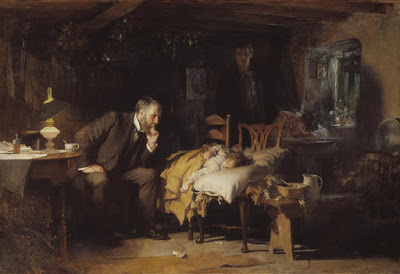
The provision of care in the intensive care unit (ICU) is based on extremely innovative technology and cutting-edge techniques, often prioritizing the delivery of aggressive treatment to manage the disease while neglecting the human dimension of the patient. However, in recent times there has been a surge in the introduction of Palliative care in the ICU,…
via Palliative care in the cardiac ICU. By Bárbara Salas — IC-HU PROJECT: HUMANIZING INTENSIVE CARE

SMACC Chicago Cadaver Lab Video 1. Intraosseous line insertion techniques – Proximal & Distal Tibial & Humeral head. The post Critical Care Proceedures: Intraosseus Insertion appeared first on Intensive Care Network.
via Critical Care Proceedures: Intraosseus Insertion — Intensive Care Network

Rural trauma – a high-speed vehicle roll over, a farming accident with a chainsaw, a gas BBQ explosion at the family picnic. These are all scenarios that may affect individuals & families…and the rural community. Occasionally a multi-agency event such as a bushfire, extreme weather event or other natural disaster will cause traumatic injuries and…

2 weeks post SMACC and I have finally got around to sharing some thoughts. The first is to say that it is difficult to outline what I learnt during my 4 days in Dublin. To summarise, it was more about ‘how’ I practice medicine, than ‘what’ I do. But, here are some of my highlights. […]
via SMACC – Innovate, Explore, Connect, Belong, Inspire — phemcast

Full credit for this goes to Dr James DuCanto, airway geek and innovator from Milwaukee, USA. It’s been my great privilege (and crazy pleasure) to facilitate with Jim at smacc airway workshops in Chicago and Dublin, using the SALAD sim (suction assisted laryngoscopic airway decontamination). This is a great setup to teach techniques to manage…

St.Emlyn's – Meducation in Virchester #FOAMed In its 4th iteration at SMACC this year, the airway workshop was held twice – in the morning and afternoon. It was essentially a masterclass in what is being developed and implemented regarding airway simulation and skill around the world. Each workshop was divided into four sessions –…
via #smaccAIRWAY – Airway Masterclass at #smaccDUB — St.Emlyn's

A nice little paper caught my eye in this months Emergency Medicine Australasia. Entitled “Review of therapeutic agents employed by an Australian aeromedical prehospital and retrieval service” this is a really simple paper; basically an audit of the medications carried and used over a 12 month period by the Sydney HEMS service. Everyone likes playing with…

The dreaded ‘cannot intubate, cannot oxygenate’ scenario is one which most clinicians will never encounter. In elective anaesthesia, the CICO rate has been described by Cook & Macdougall as 1/5000 in elective cases, proceeding to emergency surgical airway in 1/50,000 (a more recent study from Japan describes CICO as 1/32,000 – either way, a rare event). CICV although rare, accounts…

It’s been a while since a collected tips and tricks post. Previously we’ve had posts on cannulation, bag-mask technique and laryngoscopy. Time to get back to vessels and some odds and ends on central lines. Anaesthetists are skilled at many things. Airways. Making scrubs look fashionable. Or deliberately unfashionable. Even making small talk. Sometimes without the aid […]
 Prehospital and Retrieval Medicine - THE PHARM dedicated to the memory of Dr John Hinds